Go Back
Cold Room vs Cold Storage: Which Do You Need?
“Cold room” and “cold storage” are terms you must have come across if your business handles agricultural produce, pharmaceuticals, beverages or other temperature-sensitive products
They are closely related, but they do not always mean exactly the same thing.
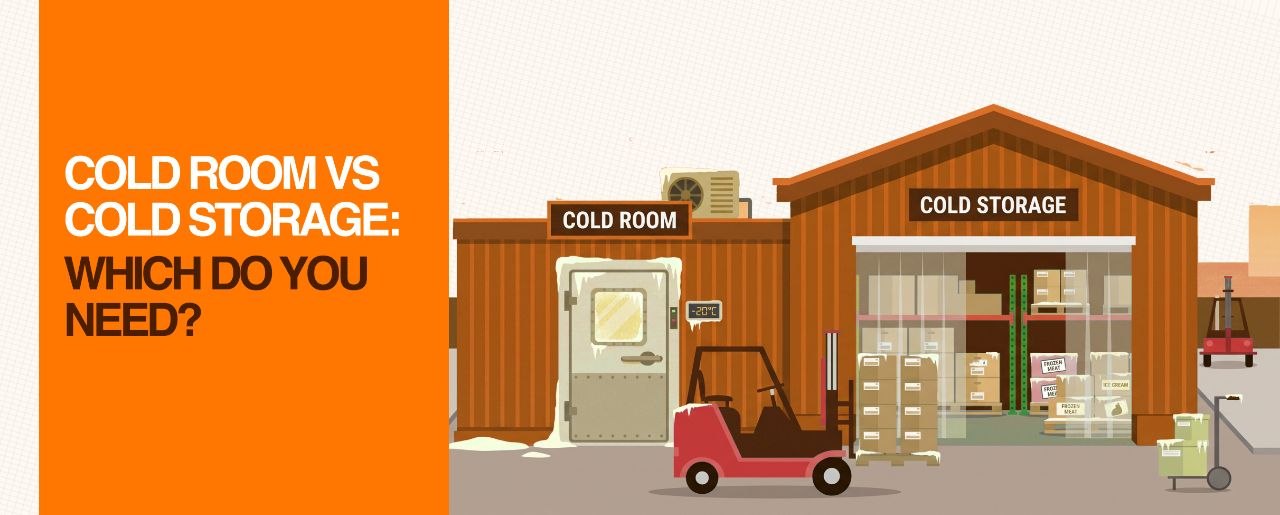
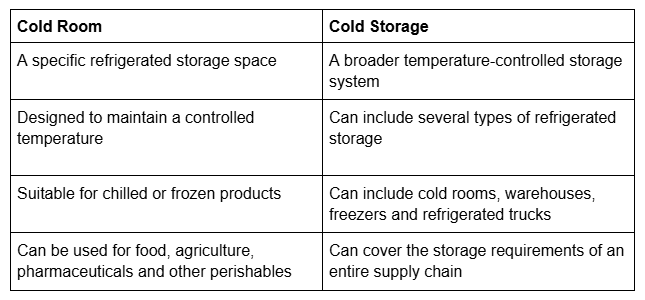
A cold room is a temperature-controlled space designed to keep products within a specific temperature range. In contrast, cold storage is a broader term that can include cold rooms, refrigerated warehouses, freezers, refrigerated trucks and other temperature-controlled systems.
In this guide, we will explain the difference between a cold room and cold storage, the products that require temperature-controlled storage, how to choose the right cold room, what affects cold room costs in Nigeria, and what to consider when looking for a cold room in Lagos or Ikeja.
What Is a Cold Room?
A cold room is an insulated, refrigerated storage space designed to maintain a controlled temperature for products that can spoil or deteriorate in normal conditions.
Unlike a household refrigerator or freezer, a commercial cold room is designed for larger quantities of products and more consistent temperature control.
Businesses that may need a cold room include:
- Food manufacturers
- Restaurants and hotels
- Supermarkets
- Meat and poultry businesses
- Fish and seafood businesses
- Farmers and agribusinesses
- Fruit and vegetable distributors
- Pharmaceutical companies
- Beverage businesses
- Importers and distributors of temperature-sensitive products
The right cold room helps businesses reduce spoilage, preserve product quality and store inventory for longer without relying on ordinary refrigeration.
For example, Flux Logistix's current cold-chain solutions include cold rooms nationwide with temperature ranges from -22°C to 6°C, allowing different types of temperature-sensitive products to be stored under controlled conditions.
What Is Cold Storage?
Cold storage is the broader process of storing temperature-sensitive products under controlled conditions.
A cold storage solution can include:
- Cold rooms
- Refrigerated warehouses
- Freezers
- Blast freezers
- Mobile cold rooms
- Refrigerated containers
- Refrigerated trucks/cooling vans
- Other temperature-controlled storage systems
This means a cold room can be part of a larger cold storage operation.
For example, a farmer may harvest vegetables, move them in a refrigerated truck, store them in a cold room and later transport them to distributors. The entire process involves cold storage and cold-chain logistics, not just one cold room.
Cold Room vs Cold Storage: What's the Difference?
The simplest way to understand the difference is this:
A cold room is a specific type of temperature-controlled storage space. Cold storage is the broader category that includes cold rooms and other systems used to preserve temperature-sensitive products.
So, if you search on Google for “cold room near me”, you may be looking for one specific temperature-controlled facility.
And if you search for “cold storage facility near me”, you may be looking for a broader commercial storage operation.
What Products Need Cold Storage?
Not every product needs refrigeration, but temperature control is critical for many products that are sensitive to heat, humidity and changes in storage conditions.
- Food and Beverages
Cold rooms and cold storage facilities are commonly used for:
- Meat
- Fish and seafood
- Dairy products
- Frozen foods
- Beverages
- Processed foods
For these products, maintaining the right temperature can help slow spoilage and preserve quality.
1. Agricultural Products (Fruits and Vegetables)
Fresh produce can deteriorate quickly when exposed to unsuitable temperatures.
Products such as fruits, vegetables and flowers can require specific temperature and humidity conditions depending on the product.
This means businesses should not simply look for a cold room. They should look for a cold room that is suitable for the particular product being stored.
2. Pharmaceuticals
Some medicines, vaccines and other pharmaceutical products are temperature-sensitive and require controlled storage.
Pharmaceutical businesses therefore need to consider more than whether a facility is simply "cold."
They need to consider temperature monitoring, reliability, handling procedures, power supply and the suitability of the facility for pharmaceutical products.
Flux Logistix currently describes its cold-chain infrastructure as food-grade and pharma-ready, supporting businesses that require controlled storage for temperature-sensitive products.
3. Other Temperature-Sensitive Products
Cold storage can also be relevant for:
- Flowers
- Certain cosmetics
- Chemicals
- Agricultural products
- Other temperature-sensitive inventory
The specific storage requirements will depend on the product.
How Do You Know Whether You Need a Cold Room or Cold Storage?
The answer depends on what you are storing, how much you are storing and how your products move through your supply chain.
A dedicated cold room may be suitable if you need a controlled physical space for your inventory.
A larger cold storage facility may make more sense if you need commercial warehousing capacity for significant quantities of products.
You may also need a broader cold-chain solution if your products need temperature control both while they are being stored and while they are being transported.
How to Choose the Right Cold Room for Your Business
Choosing the right cold room starts with understanding your product requirements.
1. Consider the Required Temperature
Different products have different temperature requirements.
Chilled products do not necessarily need the same conditions as frozen products, while certain agricultural products may require specific temperature and humidity conditions.
Before renting or choosing a cold room, establish the temperature range your products require.
2. Consider Storage Capacity
Think about:
- Current inventory
- Expected inventory growth
- Product dimensions
- Pallet or crate requirements
- How frequently products enter and leave the cold room
- How frequently products enter and leave the cold room
A business that only needs temporary storage for a small quantity of products may have very different requirements from a manufacturer or distributor storing inventory in bulk.
3. Consider Temperature Monitoring
Maintaining the right temperature is not enough. Businesses should also be able to verify that the required temperature has been maintained.
Temperature monitoring and records can help identify temperature fluctuations and provide greater visibility into storage conditions.
Flux highlights live temperature logs as part of its cold-chain offering, helping businesses monitor temperature conditions for stored and transported goods.
4. Consider Power Reliability
A cold room depends on consistent power to maintain its operating temperature.
This is particularly important when choosing a cold room in Nigeria, where businesses need to consider not only refrigeration equipment but also the reliability of the power infrastructure supporting it.
A cold room provider should be able to explain what happens when the primary power supply fails.
Flux's facilities are described as operating with 24/7 electricity and backup generators, providing additional protection for temperature-sensitive inventory.
5. Consider Hygiene and Product Handling
For food and pharmaceutical products, refrigeration is only one part of proper storage.
The facility should also support appropriate:
- Cleaning
- Handling
- Loading and unloading
- Product segregation
- Hygiene practices
- Inventory management
A cold room that maintains the correct temperature but handles products poorly is still a problem.
What Makes a Cold Room in Nigeria Suitable for Storage?
The suitability of a cold room depends on its location, temperature range, capacity, power reliability, security, monitoring and the services available around the storage facility.
For businesses searching for a cold room in Lagos, location can have a major effect on logistics costs and delivery times.
Consider how close the cold room is to:
- Your customers
- Suppliers
- Markets
- Ports
- Airports
- Major roads
- Distribution routes
A strategically located cold storage facility in Lagos can make it easier to move products into and out of storage.
Businesses searching for a cold room near me should therefore consider more than physical proximity. The closest cold room is not automatically the most suitable one.
How Much Does a Cold Room for Rent Cost?
If you are searching for cold room prices in Nigeria, there is no single figure that applies to every cold room.
The cost of a cold room for rent depends on several factors, including:
- Cold room size
- Required temperature
- Storage capacity
- Type of refrigeration equipment
- Insulation specifications
- Power requirements
- Location
- Duration of storage
- Product type
- Additional services
A small cold room will naturally have different requirements from a large commercial cold storage warehouse.
Similarly, the cost of renting cold storage for food can differ depending on the amount of space required, the duration of storage and the temperature requirements of the products.
If you are searching for cold room prices in Lagos Nigeria, it is therefore more useful to request a quotation based on your actual storage requirements than to rely on a generic figure.
Cold Storage and Refrigerated Transport
A cold room protects products while they are in storage.
A refrigerated truck protects them while they are moving.
That distinction matters because temperature-sensitive products can be exposed to unsuitable conditions before they reach a cold storage facility or after they leave one.
For example, a business can move temperature-sensitive products into cold storage, hold them under controlled conditions, and then use refrigerated transportation to move them to customers or distribution points.
For businesses managing a complete cold chain, storage and transportation therefore need to work together.
Finding the Right Cold Room in Lagos, Nigeria
Choosing a cold room in Nigeria should ultimately come down to what your products require and how the facility fits into your supply chain.
If you need a physical temperature-controlled space, a cold room may be sufficient.
If you need larger-scale commercial storage, you may need a cold storage warehouse or cold storage facility.
If your products also need temperature-controlled transportation, a refrigerated truck would also be required.
Flux Logistix provides cold-chain solutions that include temperature-controlled storage and refrigerated trucks for businesses handling food, agricultural products, pharmaceuticals and other temperature-sensitive products.